Power interruptions can affect everyday activities at home, business operations in offices and productivity in commercial facilities. For locations that depend on an uninterrupted electricity supply, having an alternative power source such as a generator can be useful.
However, connecting two different power sources to an electrical installation requires proper planning and suitable switching equipment. This is where a changeover switch becomes important.
Choosing the right changeover switch is not simply about selecting a product based on appearance or price. Its electrical rating, number of poles, application and compatibility with the installation all need careful consideration.
1. What Is a Changeover Switch?
A changeover switch is an electrical switching device that allows a suitable electrical installation to be connected to one of two alternative power sources.
For example, a home may normally receive electricity from the utility supply. During an interruption, a generator can serve as an alternative source. A properly selected changeover switch allows the authorised user to switch between these sources according to the installation design.
Changeover switches are commonly considered for:
- Residential buildings with generator backup.
- Commercial offices and business premises.
- Retail shops and showrooms.
- Small industrial facilities.
- Installations with alternative power arrangements.
2. Why Is Choosing the Right Changeover Switch Important?
Different installations have different electrical requirements. A switch suitable for one application may not be appropriate for another.
Suitable Electrical Rating
The selected switch must have suitable voltage, current and utilisation ratings for the intended application and connected installation.
Correct Power Source Switching
The switching arrangement must be designed to prevent unintended interconnection of incompatible power sources.
Installation Compatibility
The number of phases, poles, neutral arrangement and earthing design must be considered before selecting the equipment.
3. Five Important Factors to Consider Before Buying
A. Understand Your Electrical Load
Start by understanding the connected load and electrical requirements of the installation. Consider the equipment that needs to operate during a power interruption.
The switch rating should be selected according to the actual electrical design, not simply the total number of appliances or the physical size of the building.
B. Check the Number of Poles
Changeover switches are available in different pole configurations. The appropriate arrangement depends on the supply system and how phase and neutral conductors need to be switched.
A qualified electrical professional should determine whether a two-pole, three-pole or four-pole arrangement is suitable for the application.
C. Consider the Power Sources
Identify the power sources involved in the switching arrangement. Common examples include utility mains and a generator.
For installations involving solar systems, inverters or other alternative supplies, the switching design must also account for the equipment manufacturer's requirements and the applicable electrical standards.
D. Verify the Switching Mechanism
The switching mechanism should be appropriate for the installation and designed to prevent unsafe source interconnection.
Where required, use a suitable interlocked arrangement that prevents both sources from being connected together unintentionally.
E. Check Product Specifications and Quality
Before purchasing, review the manufacturer's technical specifications, applicable standards, ratings, construction and intended application.
Never select electrical switching equipment only because it has a higher ampere rating or a lower price.
4. Where Are Changeover Switches Used?
Residential Applications: Homes with generator backup may require a suitable switching arrangement to select between the utility supply and generator.
Commercial Applications: Offices, retail outlets and other business premises may use alternative power sources to support essential operations during interruptions.
Industrial Applications: Industrial installations may require carefully engineered switching arrangements based on the electrical distribution design and equipment requirements.
Institutional Buildings: Certain facilities may use backup power arrangements for selected electrical loads, subject to their specific safety and operational requirements.
5. Common Mistakes to Avoid
- Choosing a switch without checking the actual electrical load.
- Ignoring the required pole configuration.
- Using equipment that is not suitable for the intended application.
- Ignoring neutral switching and earthing requirements.
- Connecting two power sources without a suitable switching arrangement.
- Ignoring the manufacturer's installation instructions.
- Attempting installation without qualified electrical assistance.
Important Electrical Safety Note
Changeover switch selection and installation should be carried out by a qualified electrical professional. The complete installation must follow applicable electrical regulations, source interlocking requirements, earthing arrangements and manufacturer instructions. A changeover switch alone does not replace overcurrent or residual-current protection.
6. Why Product Knowledge Matters for Electrical Dealers
For electrical dealers, retailers and distributors, understanding product specifications is an important part of serving customers effectively.
Customers may have different requirements depending on their building type, electrical load and backup power arrangements. Providing accurate product information helps them consult the right professional and choose equipment suitable for their installation.
Dealers should be familiar with:
- Available switch configurations.
- Current and voltage ratings.
- Product specifications and applications.
- Manufacturer documentation.
- Installation and compatibility requirements.
Conclusion
A changeover switch is an important part of an electrical installation that uses alternative power sources. Selecting the right product requires an understanding of the electrical load, switching arrangement, pole configuration and technical specifications.
Whether you are planning a residential generator backup system or managing a commercial electrical installation, make product selection and professional installation a priority.
At Maasarent, we believe that reliable electrical systems begin with quality products, correct selection and responsible installation practices.
Think Safety, Choose Quality!
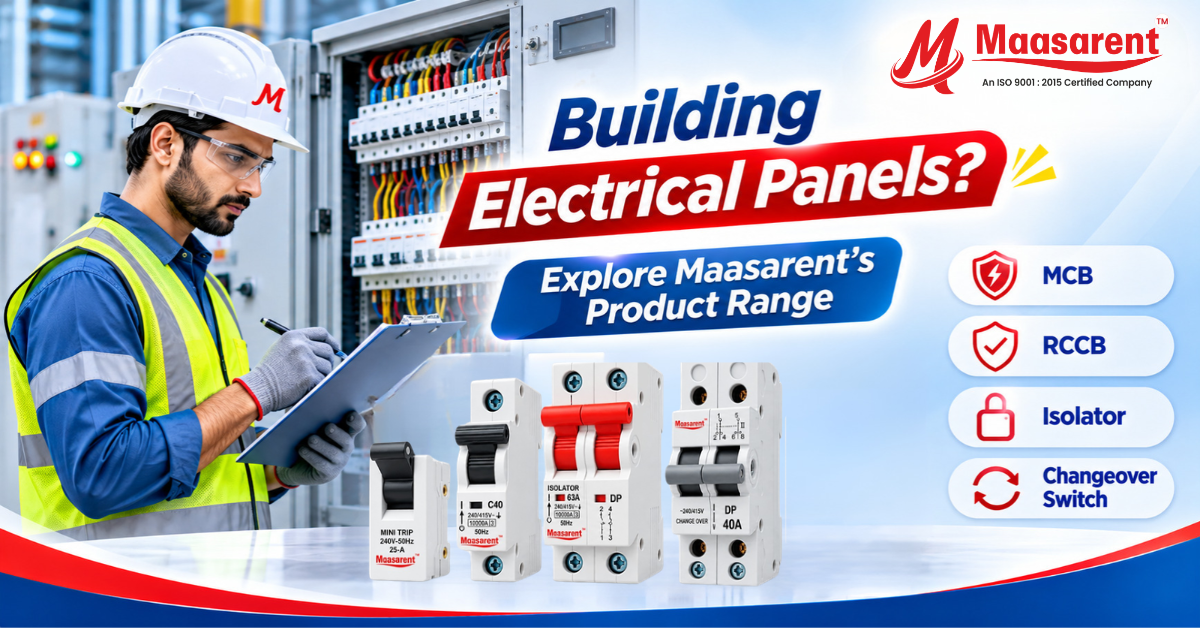
Explore Maasarent's range of MCBs, RCCBs, Isolators and Changeover Switches.
Call Now: 9355255105
Visit www.maasarent.com