7 Common Problems Electrical Shop Owners Face & How to Solve Them

7 COMMON PROBLEMS
ELECTRICAL SHOP OWNERS FACE
And practical ways to solve them and build a stronger electrical business.
Running an Electrical Shop Is More Than Selling Products
An electrical shop may look simple from the outside, but shop owners manage several moving parts every day — product availability, customer requirements, inventory, supplier relationships, pricing, competition and changing market demand.
A strong business does not require every problem to disappear. Instead, it requires a structured approach to identifying problems and finding practical solutions.
The 7 Common Challenges
Limited Product Range
One of the common challenges for an electrical retailer is maintaining a product range that matches customer requirements. Customers may come looking for different ratings, configurations or types of electrical protection products.
How to solve it
Instead of stocking unrelated products simply to increase quantity, build a relevant and organised product portfolio. Consider categories such as MCBs, RCCBs, Isolators and Changeover Switches according to your local customer demand.
Poor Stock Management
Having products is not enough. Having the right products available at the right time is equally important. Overstocking slow-moving products can lock up working capital, while insufficient stock of popular items can lead to missed sales opportunities.
How to solve it
Track which products move regularly. Maintain minimum stock levels for frequently requested items and review slow-moving inventory periodically. Keep simple records of purchases, sales and replenishment requirements.
Supplier Coordination Problems
Delayed communication, unclear product specifications or inconsistent supply can make shop management more difficult. Electrical retailers need suppliers who can clearly communicate product information, availability and commercial terms.
How to solve it
Work with suppliers who provide clear product information and maintain professional communication. For larger requirements, discuss pricing, stock availability, dispatch timelines and product categories before placing orders.
Changing Customer Requirements
Electrical customers do not always ask for the same product. A residential customer, contractor, electrician and commercial buyer may have very different requirements.
How to solve it
Understand your local customer base. Identify the categories most frequently requested in your area and organise your inventory around actual demand. Train your sales staff to understand basic product differences and specifications.
Price Competition
Electrical markets can be competitive, and customers may compare prices between brands and suppliers. Competing only by reducing prices can make it difficult to maintain healthy business margins.
How to solve it
Focus on the complete value proposition rather than price alone. Consider product specifications, quality documentation, brand consistency, availability, service and supplier support when evaluating products for your shop.
Building Customer Trust
Customers often want confidence that the electrical products they purchase have clear specifications and come from a reliable source. This becomes especially important when customers return to the shop for repeat purchases.
How to solve it
Keep product specifications and documentation available. Clearly explain product ratings and intended applications, and avoid recommending products without understanding the customer's actual electrical requirement. Consistency in product sourcing can also help create familiarity with customers over time.
Difficulty Growing the Business
Once an electrical shop becomes stable, the next challenge is often deciding how to expand. Should you add more products? Target new customers? Work with contractors? Explore dealership or distribution?
How to solve it
Start with the business you already understand. Analyse your best selling categories, identify gaps in your current product portfolio, and explore additional customer segments. Retailers can also explore dealer, distributor or bulk-buying opportunities as their business develops.
Turn Problems Into Action
Instead of trying to solve every challenge at once, create a simple process for improving your electrical shop step by step.
Analyse
Understand your customers, sales and product demand.
Organise
Organise your inventory and supplier relationships.
Improve
Improve product range, service and customer communication.
Expand
Explore new categories and business opportunities.
Where Can a Product Partner Help?
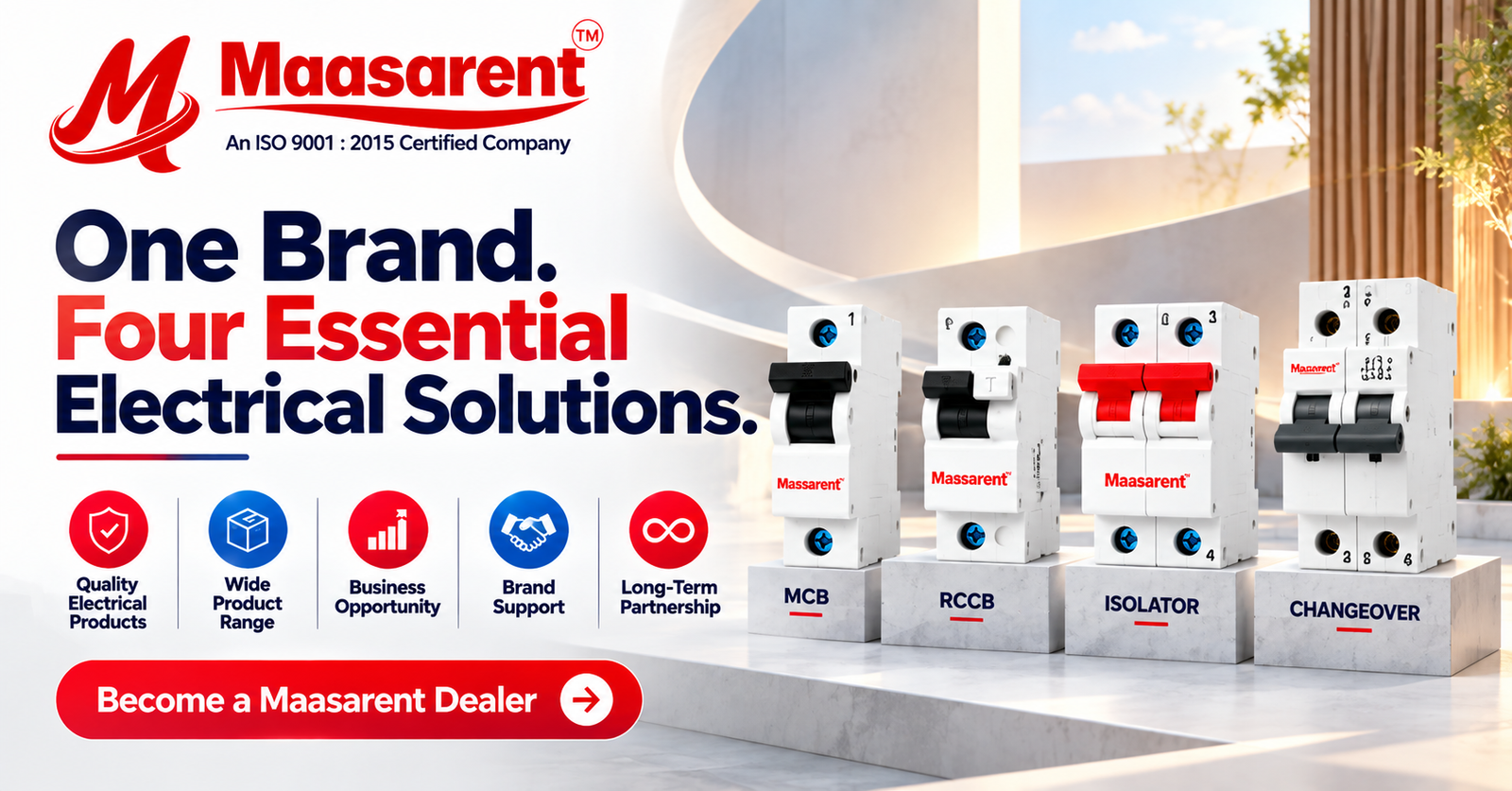
A structured product portfolio can make sourcing more organised and give electrical businesses more categories to explore. Maasarent's current range includes MCBs, RCCBs, Isolators and Changeover Switches, along with other electrical protection products. :contentReference[oaicite:0]{index=0}
MCB
A commonly used circuit-protection category for electrical installations.
RCCB
A residual-current protection category used as part of suitable electrical protection systems.
Isolator
A switching category used for electrical isolation applications.
Changeover Switch
A switching solution used in appropriate power-source transfer arrangements.
Don't Solve Every Business Problem Alone
Product sourcing is one part of running an electrical shop. A suitable manufacturer or product partner can also provide another layer of business support.
Maasarent's dealer and distributor program currently highlights dealer pricing and margins, ISO 9001:2015 certified products and marketing and sales support. :contentReference[oaicite:1]{index=1}
Electrical Shop Growth Checklist
Build a Shop That Is Ready for Tomorrow
Electrical shop challenges are part of running a competitive business. The key is to identify them early, organise your processes and make practical improvements over time.
From building the right product range to improving inventory, supplier coordination and customer service, every improvement can contribute to a more organised business.
Explore Maasarent
Explore electrical protection products and discuss retailer, dealer, distributor or bulk-buying requirements with Maasarent.
Explore Maasarent →